Afrofuturism Is a Psychedelic Practice—Even Without the Drugs
There is a tendency to pair psychedelia with something ingested, like a molecule, and perhaps a mind melting experience.
But long before the current psychedelic renaissance found its language in clinical trials and venture capital, there were entire cultural movements that embodied psychedelic thinking without relying on substances at all. Afrofuturism is one of them.
Afrofuturism is often described as a cultural aesthetic that blends science fiction, African diasporic history, and speculative futures. Afrofuturism is also very much a reorientation of perception. It dissolves linear time, reclaims narrative authorship, and constructs alternate realities in which Black identity is expansive, technologically integrated, and cosmically situated. In other words, it does what psychedelics are often said to do: it loosens the grip of inherited structures and opens the door to new ways of seeing.
The Original Architects of Alternate Reality
Before the foundations of Afrofuturism were laid out in interviews and books, they were defined by art and by sound. In the 1970s, artists like Sun Ra and George Clinton were building new worlds and the music was the scaffolding. Sun Ra famously claimed he was from Saturn. But the point was never whether this was “true” in a literal sense. It was more about his refusal of the constraints of a reality that had historically denied Black people authorship over their own story. Through Ra’s Arkestra, he fused jazz with Egyptian mythology, outer space cosmology, and spiritual philosophy, offering an entirely new framework for identity that was unbound by Earthly limitations.
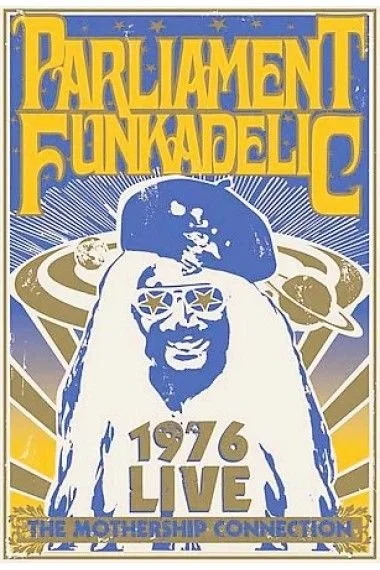
Around the same time, Parliament-Funkadelic transformed stages into intergalactic theaters. Their performances featured spaceships, mythic characters, and narratives of cosmic liberation. Albums like Mothership Connection didn’t just entertain, they proposed a future in which Black culture was not peripheral, but central, piloting the very machinery of the cosmos.e it stand out
George Edward Clinton was born in 1941, but the story people tell about him feels less like a biography and more like a transmission that slipped through time. Parliament-Funkadelic wasn’t designed to fit into any genre or category. It was a total sprawling, shapeshifting collective that behaved like a living organism. Parliament and Funkadelic became twin faces of the same entity—one slick and orchestrated, the other raw and psychedelic—but both orbiting the same gravitational center: George!
Then the Mothership landed.
On stage, it descended in chrome, glowing and impossible. Out of it emerged characters who felt less like performers and more like archetypes: Starchild, Dr. Funkenstein, Sir Nose D’Voidoffunk. The shows were chaotic, theatrical, humorous, and deeply intentional. There were surreal costumes and cosmic storytelling and a radical proposition: What if Black identity wasn’t confined to history? What if it expanded into the future?
The music itself bent genres like light around gravity. It pulled from gospel, rock, jazz, and psychedelia, then recombined them into something elastic and alive. Bass and synths spoke words that opened portals. The silly, the absurd, and the surreal was a disarming Trojan horse for ideas about liberation, identity, and possibility.
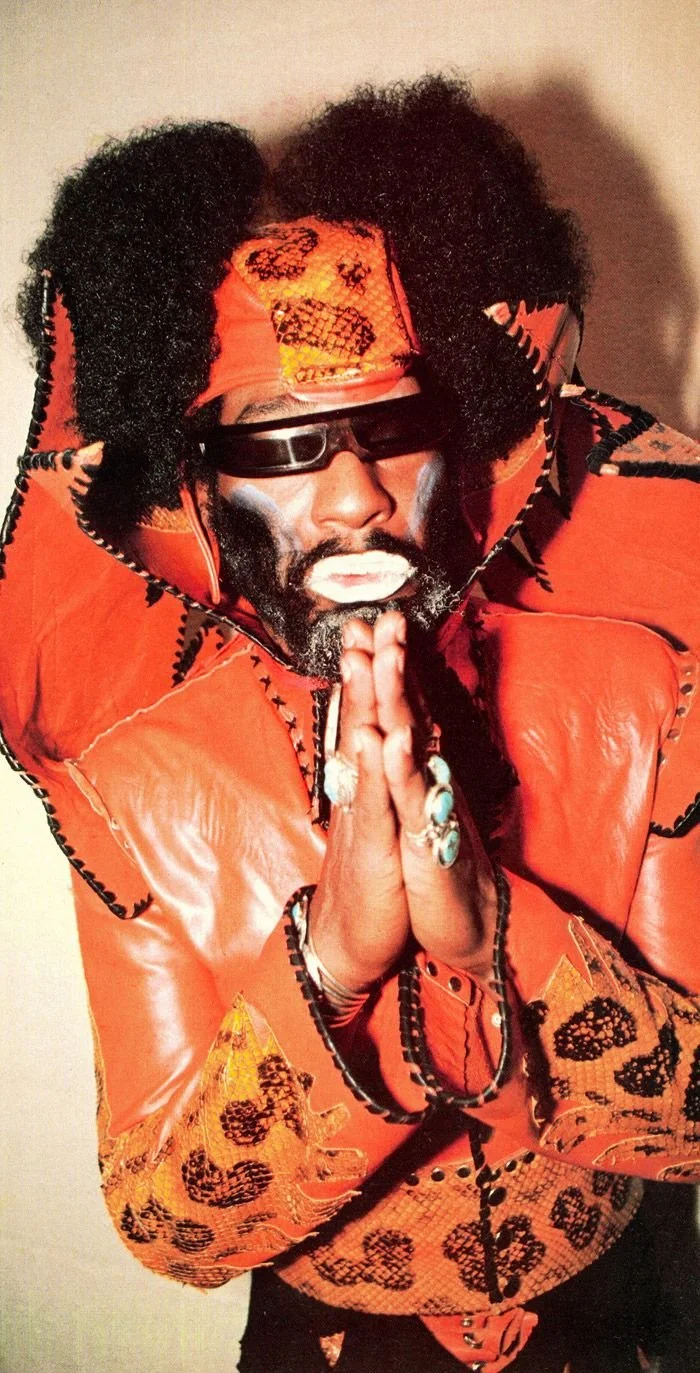
“We had put black people in situations nobody ever thought
they would be in. I figured another place you wouldn’t think black people would
be was in outer space.” -George Clinton
These founders of funk had an imagination beyond what had been imposed and a bold refusal to accept the world as given.
Psychedelia as Structure…but a really loose one.
Afrofuturism is often adjacent to conversations about psychedelics, but its relationship to them is frequently misunderstood. It is not dependent on altered states induced by chemicals. Its psychedelic quality is embedded in how it organizes reality, or disorganizes it. Afrofuturism collapses timelines, allowing ancestral memory and speculative futures to coexist. It expands identity beyond rigid categories, blending human, machine, and mythological forms. It treats imagination not as fantasy, but as infrastructure.
This is a kind of cognitive flexibility that mirrors what psychedelic compounds can facilitate: the loosening of entrenched patterns and the emergence of novel connections. It is achieved through culture, music, narrative, history, and the collective experience.
The music was the main pillar, the conduit by which perception was reshaped.
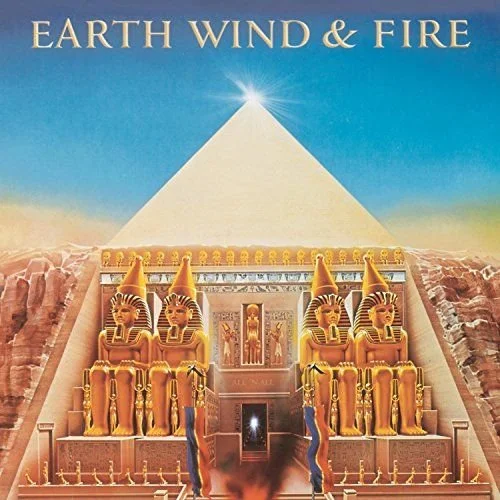
There was a celestial precision to Earth, Wind & Fire. This is a band that performed music and orchestrated the experience as a ritual.
Draped in gold, moving through choreography that felt both ancient and futuristic, they carried a distinctly Afrofuturist vision all about elevation. What made it radical was the emotional register of tenderness, joy, and spirituality. In a musical era often defined by bravado, EWF offered a different masculine archetype that was luminous, harmonious, and deeply attuned. Psychedelia here wasn’t distortion or chaos, but coherence.
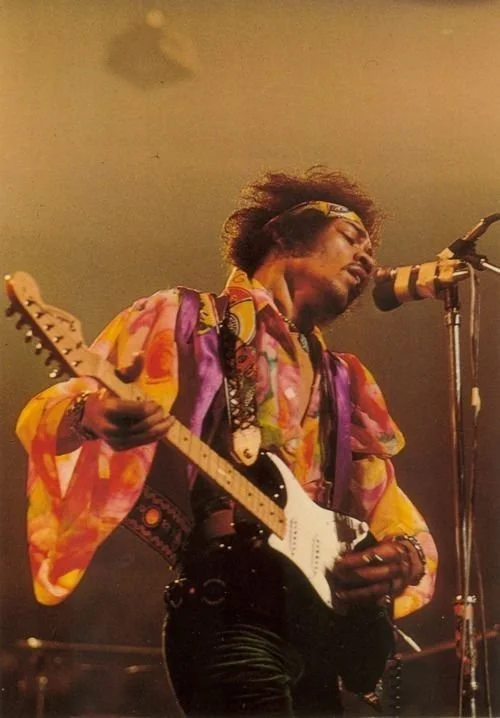
Jimi Hendrix moved through the world radically, draped in velvet, lace, distortion, and fire.
In the swirl of psychedelic rock, where sound itself seemed to liquefy, Hendrix embodied an Afrofuturist gesture where he also reimagined masculinity. His presence softened the rigid edges of the male archetype by expanding it to be inclusive, sensual, expressive, fluid, adorned, and more powerful than any stereotype. Psychedelia, in his hands, was a sonic experimentation and a permission slip to dissolve binaries, masculine and feminine, earthly and cosmic, self and myth.
His sound bent time and melted your mind. Upside down, maybe, but in that inversion his distorted, slinky sound cut through illusion and he revealed that he was the future.
As culture evolved, so did the sound. In Detroit, techno pioneers like Juan Atkins, Derrick May, and Kevin Saunderson (The Belleville Three) translated the cosmic jazz and funk of earlier decades into electronic form. Their music emerged from a post-industrial landscape, where abandoned factories and economic decline created a stark backdrop for innovation. Machine-driven, rhythmic, precise, techno became a language of possibility. It suggested that even within systems of collapse, new worlds could be engineered.
The electronic duo, Drexciya, took this even further, constructing an entire mythology of an underwater civilization descended from enslaved Africans thrown overboard during the transatlantic slave trade. In their telling, the people lived on and their lives were transformed and evolved into a thriving, hidden society beneath the ocean.
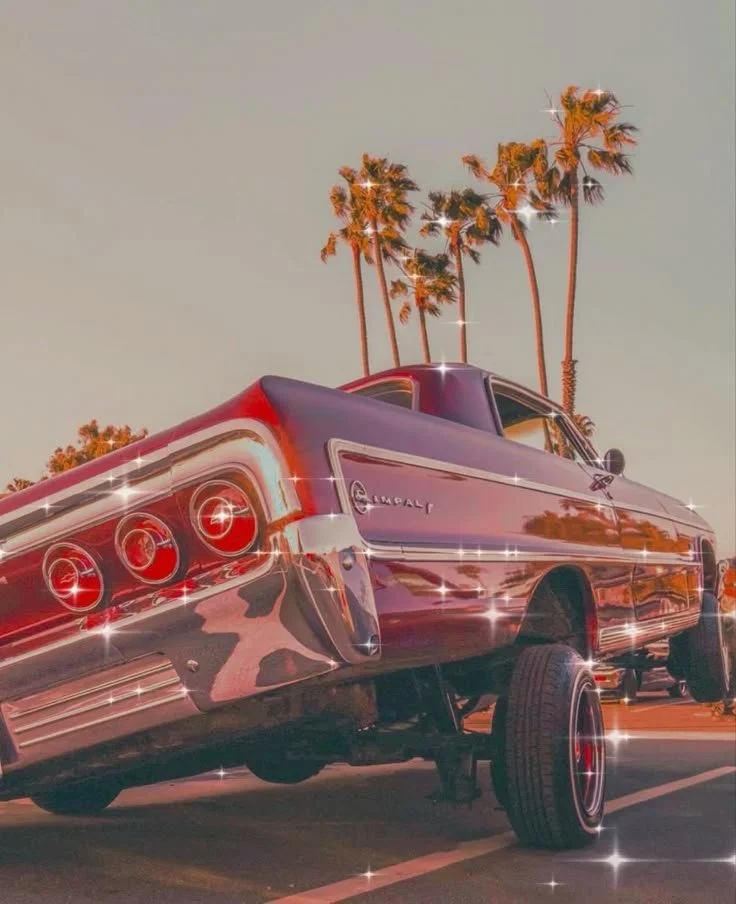
By the time the term Hood Futurism began circulating around 2013, the aesthetic it described had already been unfolding for decades. It was very strong in the mid to late 1990s hip-hop.
If classic Afrofuturism imagined liberation through outer space, Hood Futurism grounded that same imaginative impulse in the immediacy of the “hood”—public housing, corner stores, lowriders, block parties, and the textured realities of urban life. Perhaps instead of projecting it into outer space, it localized it, with a new vantage point.
What does the future look like from here? From inside environments shaped by systemic constraint, but also by creativity, ingenuity, and cultural density? The answer was hyper-stylized. It looked like spinning chrome rims, candy painted cars, warped cityscapes, music videos blending street realism with surreal edits and effets, and fashion that exaggerated proportion, color, and identiy.
On the sonic side, G-funk translated George Clinton’s cosmic funk into something cinematic, slow and elastic. Artists like Dr. Dre and Snoop Dogg sampled Parliament-Funkadelic and recontextualized the Afrofuturist lineage into a new environment, where the spaceship became the lowrider, and the galaxy became the block.
Hood Futurism recognizes that innovation often emerges from adaptation, and in that sense, it is both continuation and evolution. The same question still at the center: who gets to imagine the future?
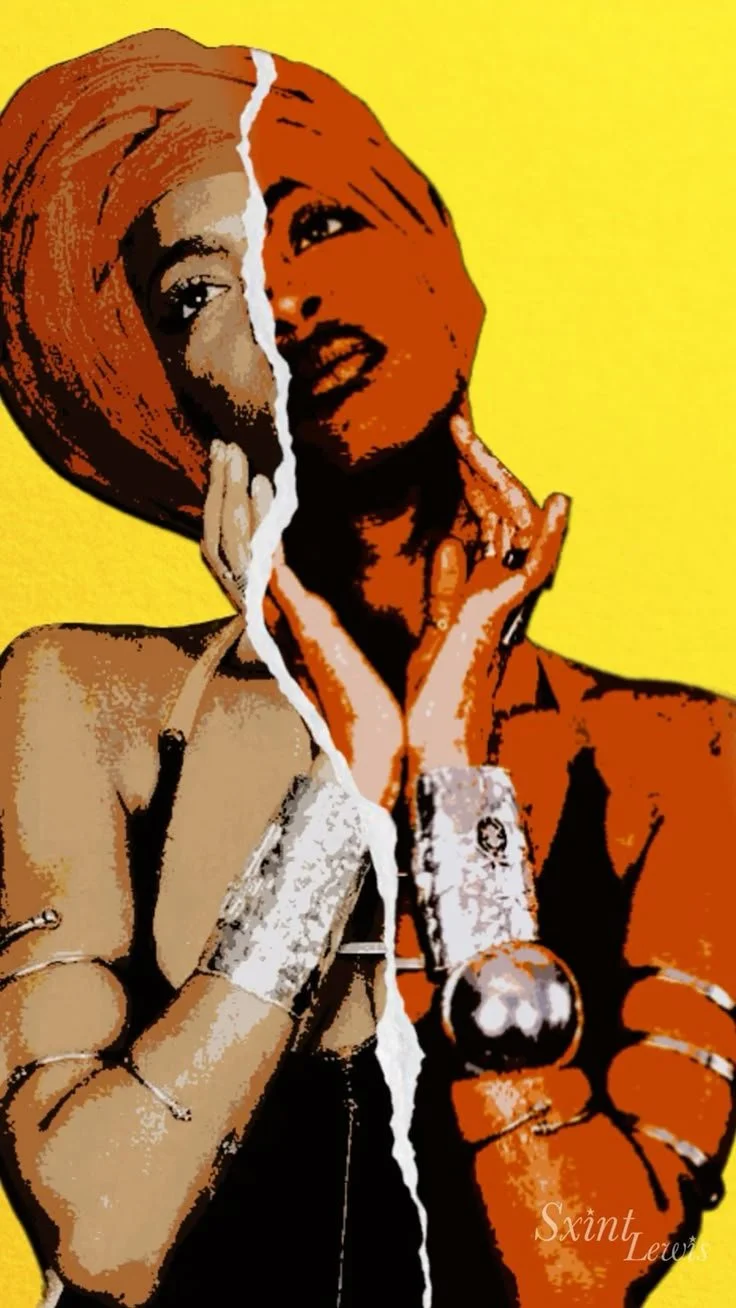
Head wraps towering like crowns, silhouettes that feel sculptural, styling a lineage anchored in myth and deep history, but knowingly gazing towards the future. This was Erykah Badu’s embodiment of Afrocentric ideology and creativity. Neo-soul is about inner worlds and integration. Her music has very much felt like a meditation on cyclical time.
If that feels difficult to grasp, check out Didn’t Cha Know from Mama’s Gun.
The Contemporary Continuum
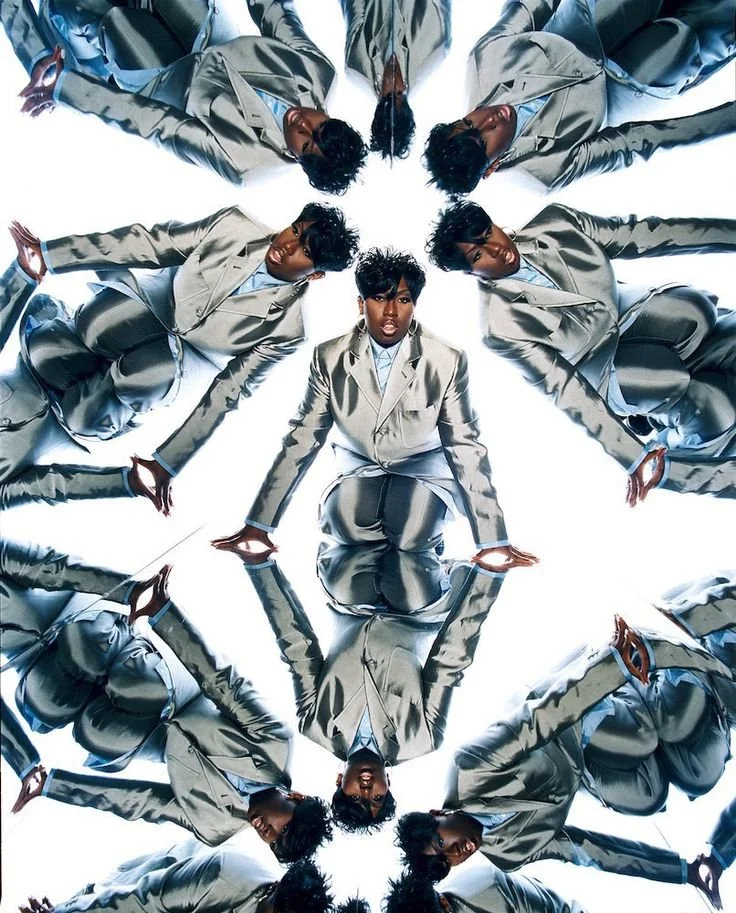
“My imagination is so far out there already. People couldn't imagine what goes on in my brain.” Missy Elliott
Today, Afrofuturism is still very much alive and embedded into music, film, literature, and fashion. And it’s still all about consciously participating in shaping the future.
Artists like Janelle Monáe use android alter egos to explore surveillance, identity, and liberation. Beyoncé’s Black Is King, her 2020 visual album, re-centered African cosmology within a global visual language. Across disciplines, creators are continuing to build futures that are both speculative and deeply rooted in cultural memory. What remains consistent is the underlying function: Afrofuturism provides a framework for imagining beyond constraint.
The overlap between Afrofuturism and contemporary psychedelic culture is not a coincidence as both are concerned with transformation—of self, of society, of perception. Both explore non-ordinary states, whether induced through substances, music, ritual, or art. Both challenge dominant narratives about reality and identity. In this sense, Afrofuturism expands the definition of psychedelia. It suggests that altered states are not the only pathway to expanded awareness. Cultural production itself—music, story, imagery—can serve as a technology for shifting consciousness.
Artists like Flying Lotus push the sonic edge further, dissolving genre entirely. His compositions feel like nonlinear, fragmented transmissions that are deeply psychedelic. There’s a sense that the music is less “produced” and more received, channeled, echoing earlier Afrofuturist ideas of cosmic intelligence.
And it doesn’t stop at sound. It spills into the visual; a kind of cultural synesthesia. What you hear begins to dress itself. Those dimensions continue to expand through art, fashion, and design, each one echoing the same signal in a different language. Artists like Wangechi Mutu create hybrid figures, collaging bodies that resist categorization. Her work feels both ancient and post-human, as if excavated from a future archaeology. Njideka Akunyili Crosby approaches it differently, layering domestic scenes with photographic transfers, Nigerian pop culture, and diasporic memory. And then there are digital artists and designers shaping Afrofuturism in real time through 3D rendering, fashion, and virtual worlds. Here, the aesthetic becomes fully immersive with organic forms paired with metallic textures, ethereal silhouettes and traditional patterns. It’s like a mad scientist’s identity lab. Not the sheep cloning kind.
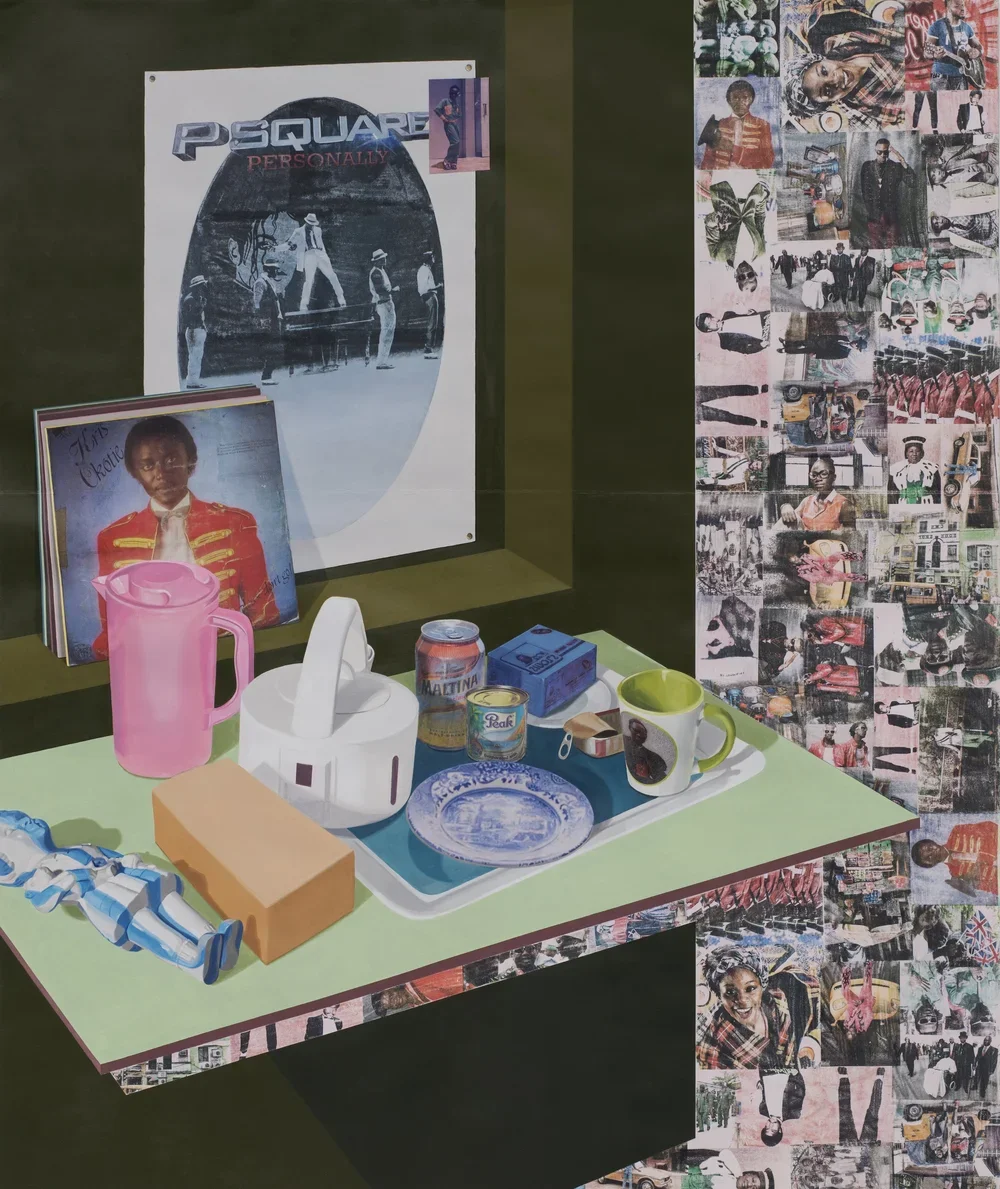
As We See You: Dreams of Jand, 2017, Njideka Akunyili Crosby
The Psychedelic NOW
As the psychedelic field continues to formalize through clinical models, regulatory frameworks, and commercialization there is a risk of narrowing its scope to pharmacology alone.
Afrofuturism and similar cultural concepts offers a counterpoint. Afrofuturism reminds us that transformation begins with imagination. It is a reminder to question what has been presented as fixed, and to construct new narratives where none existed before.
Julia Chaplin’s Psychedelic Now illustrates this broader cultural moment, tracing how psychedelics have re-emerged not just as therapies, but as catalysts for creative, communal, and philosophical shifts. Afrofuturism sits naturally within this landscape as a parallel lineage.
The future is shaped by those willing to imagine it differently. Afrofuturism, though only dubbed in the 90’s, created with a lot of intention, and little permission. A bold reminder that new worlds don’t wait to be sanctioned; they are composed, piece by piece, by those willing to see beyond what is and insist on what could be.
—
Check out A$AP Rocky and Lil Yachty’s work & Interviews
A$AP Rocky has cited Portishead, Massive Attack, Thom Yorke, and 60s psychedelic rock (e.g., T. Rex) as key influences. Projects like "L$D" and "Jukebox Joints" feature surreal, dreamlike visuals like liquified Tokyo vending machines or hazy NYC nights.
https://www.forbes.com/sites/jacquelineschneider/2019/11/15/aap-rocky-on-psychedelics-sweden-and-sexuality-at-summit-ideas-conference/
Let’s Start Hereis Lil Yachty’ fifth album and is a major shift from his trap roots into psychedelic rock, funk, and neo-soul. Though sober from alcohol and weed, he’s shared doing mushrooms over 100 times and proclaims “I Don’t Have To Be High To Make It Sound High”.