
The Medicine Song: What Modern Medicine Doesn’t Understand About Healing
Here is the truth about modern medicine:
We have learned to scan the brain, map receptors, and engineer molecules that can manage symptoms with astonishing precision. We can visualize neural networks lighting up like constellations across a monitor. We can measure neurotransmitters down to the smallest fluctuations and intervene with targeted pharmacology. And yet, people continue to suffer in ways our instruments struggle to measure.
It is in the space between what we can measure and what we can feel that deeper questions about healing begin to surface.
Joe Tafur’s book Medicine Song steps into that tension with clarity and conviction. It suggests that the future of medicine may depend not only on new molecules or technologies, but on rediscovering dimensions of healing that modern healthcare left behind. In many ways, the deeper issue may be that we have misunderstood the nature of healing itself.
And that suggestion unsettles the entire framework of modern medicine.
Western medicine is extraordinary, but it has largely trained itself to see the human being as a collection of biological systems rather than a living narrative. What often remains untouched is the terrain beneath those symptoms: the emotional history, relational wounds, unresolved grief, and existential disorientation that shape physiology over the course of a lifetime.
In traditional Amazonian healing systems, Tafur explains, these dimensions were never separated. Illness was understood as something that could move through emotional, relational, spiritual, and physical layers simultaneously. The body was never only a machine.
Psychedelics are not simply drugs, and Ceremonies are not just experiences
Though psychedelics and plant medicines can address symptoms, they are also catalysts for emotional revelation, and differ greatly from conventional pharmaceuticals. In ceremonies involving medicines such as ayahuasca, people often encounter memories they have carefully buried for years; grief and shame can surface, forgiveness appears in places long dominated by resentment, and the experience rarely feels like a chemical intervention. Rather, it feels like a confrontation with one's own interior landscape.
Modern neuroscience has described this process in its own technical language. Traditional healers describe the same phenomenon more simply: The medicine reveals what needs to be seen. Two languages, describing the same unfolding.
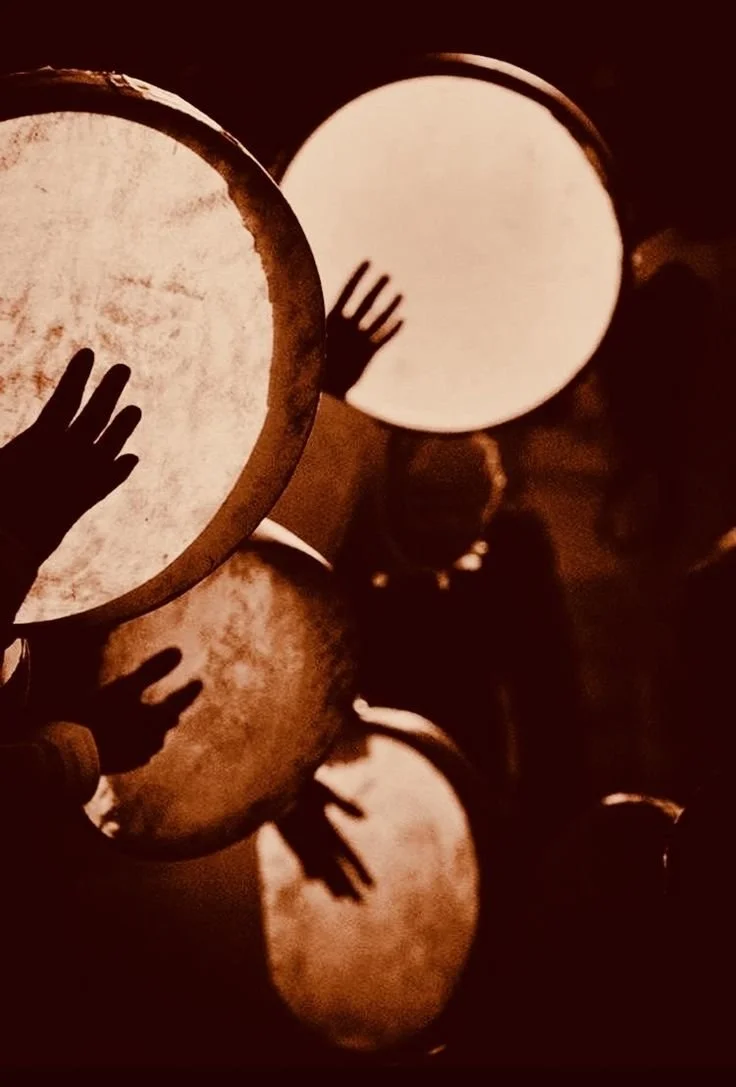
One of the most misunderstood aspects of plant medicine traditions may be the ceremony itself. To some, ritual can appear ornamental. Tafur describes ceremony as a carefully designed therapeutic container, shaping the experience through intention, structure, music, symbolism, and communal support. In contemporary psychedelic research, these variables are often described as set and setting. Within traditional healing systems, they have been refined across generations. The darkness, the songs, the rhythm of the ceremony, the presence of the healer, the shared experience of the group. All of it forms a psychological architecture that allows individuals to move through intense emotional terrain.
Remove that structure and the experience changes. The molecule alone is not the medicine.
Remembering the medicine song
The title of the book revolves around a metaphor that feels both poetic and precise. The medicine song represents the unique alignment of a person’s life when they are connected to their deepest sense of self. It is the recognition of direction, purpose, and belonging that many people lose somewhere along the path of living. Plant medicines, Tafur suggests, sometimes help people remember it. Not by imposing a new identity, but by revealing the one that was always there. For some, this manifests as reconciliation with family. For others, it is the courage to step away from careers, relationships, or identities that no longer resonate with who they have become.
Healing, in this view, is not merely the absence of symptoms, it is the restoration of alignment.
I do not believe that Joe Tafur arrived at these ideas merely as a romantic outsider searching for mysticism. He was trained as a Western physician, educated within the same biomedical system that teaches doctors to diagnose, intervene, and stabilize. But early in his career, Tafur began to notice that many of the patients he encountered were not simply suffering from biological malfunction. Their illnesses were braided with grief, trauma, disconnection, and stories that medicine had no language for. This realization eventually led him to the Peruvian Amazon, where he apprenticed with traditional healers and witnessed a radically different approach to healing. There, illness was seen and treated as a disruption in the emotional and spiritual fabric of a person’s life.
Medicine Song emerges from this personal crossing between worlds. It is the reflection of a physician who has stood inside two medical traditions and come to believe that neither is complete without the other. Joe describes developing a growing perceptual openness to emotional and spiritual dimensions of experience that Western training had largely taught him to ignore, shaping the bridge he now builds between Indigenous healing traditions and modern medicine.
The implication that unsettles Western medicine
Tafur’s argument challenges one of the assumptions at the foundation of modern healthcare. One that has stripped healing of its mythic and communal dimensions, and has bound progress to measurable biological mechanisms. Psychedelic research, however, is has begun to complicate that narrative.
Enter the MEQ30.
The Mystical Experience Questionnaire (MEQ30) is a validated 30-item self-report measure used in scientific and psychological research, including studies on psychedelics, to evaluate the depth and qualities of profound spiritual or “mystical” experiences. Drawing on philosopher Walter Stace’s framework, the questionnaire looks at four core elements commonly reported during these states: a sense of unity or interconnectedness, elevated or positive emotions, the feeling that time and space have dissolved, and the challenge of putting the experience into words.
Clinical studies consistently show that experiences of awe, interconnectedness, and meaning strongly correlate with therapeutic outcomes in psychedelic therapy. The phenomena once dismissed as subjective may be central to the healing process itself. In other words, the aspects of healing that modern medicine attempted to remove may be precisely the elements that allow transformation to occur.
Tafur invokes an Andean prophecy known as the reunion of the Eagle and the Condor.
The Eagle represents Western science, technology, and intellectual analysis. The Condor represents Indigenous wisdom, intuition, and spiritual knowledge. For centuries these two ways of understanding the world have flown apart, and now they appear to be circling the same sky. Neuroscience is mapping the biological effects of psychedelic states while therapists rediscover the importance of ritual, music, and communal support. Researchers are studying awe, connection, and meaning as legitimate clinical variables. Far from abandoning rigor, science is beginning to expand its understanding of what healing may truly require.
The stories of healing shared in this book might touch a sensitive boundary in medicine: the relationship between emotional life and physical illness. While some see these stories as compelling evidence that psychedelic medicines illuminate the mind–body interface, others may approach them with greater caution, wary of how far their interpretations should be taken. But Tafur’s perspective ultimately sits between these positions. He does not argue that emotional or spiritual experiences replace biological explanations for disease, but rather that they can interact with them in meaningful ways. The stories become a kind of parable for the book’s central idea: healing may emerge when the biological, emotional, and existential layers of a person realign, with plant medicines sometimes creating the conditions for that shift to unfold.
Medicine Song ultimately invites readers to imagine a broader vision for care, one that honors the full complexity of human life. In this framework, biology, psychology, community, culture, and spirituality are not competing explanations for illness, but interconnected dimensions of the same system.
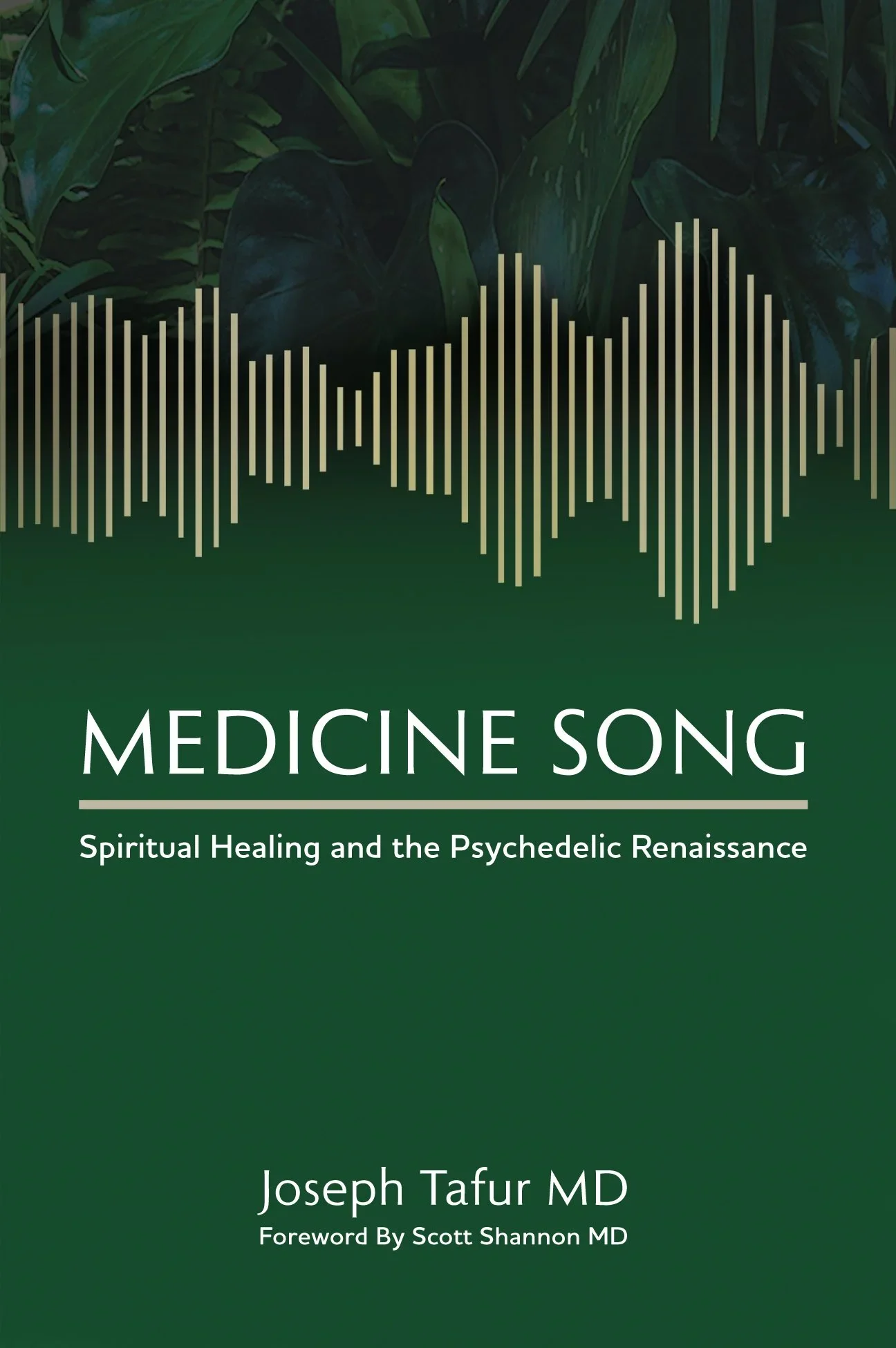
Joe Tafur, Medicine Song
https://www.drjoetafur.com/medicine-song